Boundaries in a hillside town
Horbury is built on a hill, with the land falling steeply to the south into the Calder Valley, and that shapes how a fence goes in. On a sloping garden there are two broad choices. Panels can be stepped, so each one sits level and drops a little below the last, which gives a neat, regular top line but leaves triangular gaps underneath that gravel boards or a low edge can fill. Or the fence can follow the slope, which suits closeboard fencing built in place, with the rails running parallel to the ground so the bottom stays tight to the soil all the way down. Which looks better depends on how steep the garden is and what's on the other side, and it's something best decided standing in the garden.
Steep gardens change the practical side of the job too. Posts on a slope need setting carefully so the fence stays true, and materials have to be carried down rather than wheeled across a lawn. That's all part of the planning, and it's why it pays to look at a Horbury boundary in person before a quote is given.
Stone walls and the conservation area
Horbury's conservation area covers the old centre around the Church of St Peter and St Leonard, designed and paid for by the Horbury-born architect John Carr in the 1790s, and the council's 2026 appraisal extends it to take in Westfield Road, more of Tithe Barn Street, Walker Lane and New Road. The appraisal says boundary walls play an important role in the area's character. They are generally built in stone that matches the houses they front, with half round or flat coping, and many original stone gateposts survive. It also says the council will consider an Article 4 Direction to safeguard boundary walls that don't currently need permission to demolish.
In practice, a stone front wall in the conservation area is worth keeping, and new fencing usually belongs along the side and rear boundaries rather than in its place. The appraisal also notes that some Victorian houses on the south side of Tithe Barn Street have lost the sense of enclosure at the back of their gardens, and a well-chosen rear fence or hedge line can bring some of that back.
What the planning rules say
The Planning Portal sets out the general position for England. Most fences, walls and gates don't need planning permission as long as they stay within one metre in height beside a road that carries traffic, or the pavement alongside it, and within two metres anywhere else. Height is measured from ground level, which matters on a slope where the ground on each side of a fence can sit at different levels. The exceptions are listed buildings and the land around them, boundaries shared with a neighbouring listed building's grounds, and any property whose fencing rights have been withdrawn by an Article 4 Direction or a condition on an earlier planning permission. In a conservation area, the guidance adds, taking down an existing boundary may itself need permission. Horbury has plenty of listed buildings, from the Grade I Horbury Hall on Church Street, dated to 1474, to Grade II buildings on High Street such as No. 48, so if you're close to one, speak to Wakefield Council before work starts.
Choosing materials
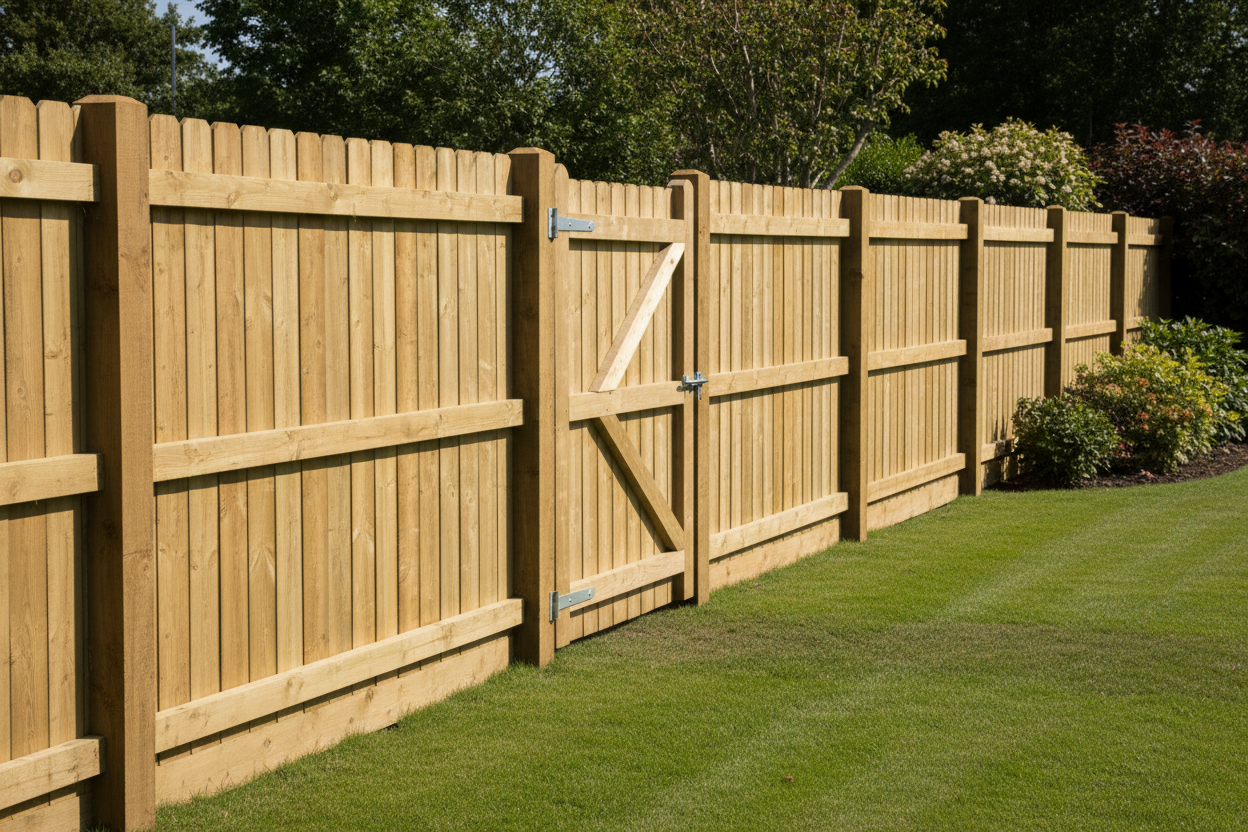
Between neighbouring back gardens the usual options are closeboard, panels or slatted fencing, on timber or concrete posts, with gravel boards along the base to stop the timber sitting on wet soil. At the front of a more modern house, a low picket fence marks the edge of the property while keeping the garden open to the street. If you need a gate, it's easier to position it at the design stage, matched to your path and wide enough for wheelie bins. We'll tell you honestly what we think will work best for the space, and the decision is yours.
Access and neighbours
Older terraced houses often have narrow access to the back garden, whether that's a passage between houses, steps down a slope or a route straight through the kitchen. Mention any of these on the phone, because getting the old fence out and the new one in is half the planning on a job like that. If the fence is shared, a word with your neighbour before it's replaced saves surprises on the day and makes sure everyone agrees where the line runs.
Planning the rest of the garden
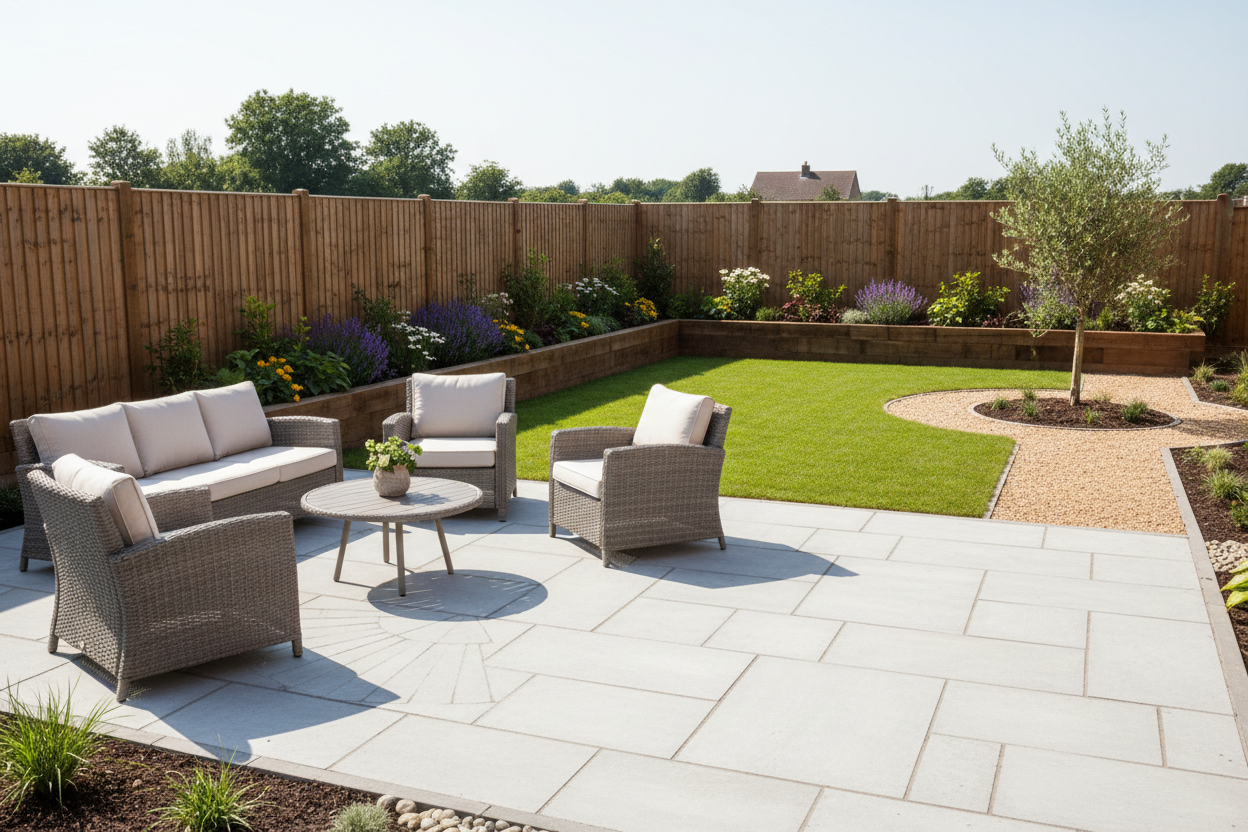
If you're rethinking the garden as well, it makes sense to put the boundary in first and plan the rest around it. Our landscaping in Horbury page covers patios, paths, turf and gravel, and if the old fence line is lost in growth, a garden clearance in Horbury beforehand makes the fencing quicker and tidier. Call 07347 572509 for a quote, Monday to Friday, 9am to 6pm. We're a family run, fully insured business based in Knottingley. There's more on our fencing page, and everything we cover in the town is on the Horbury area page.